
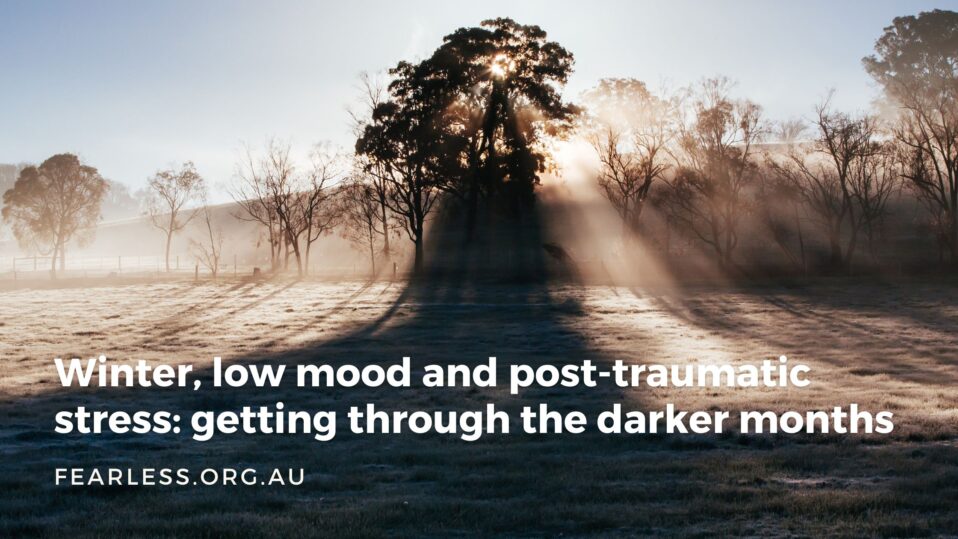
For many people, winter is more than just cold weather. As the days get shorter and the light fades earlier, mood can dip, energy can drop, and motivation can feel harder to find. For someone already living with post-traumatic stress, the darker months can add an extra weight to something that is already hard work.
If winter tends to feel heavier for you, you are not imagining it — and you are not alone.
Why winter can feel harder
Less daylight, colder temperatures and shorter days all affect the body and mind. Reduced sunlight can influence sleep, energy and mood. The cold and the early dark can make it tempting to stay indoors, cancel plans and pull away from the people and activities that usually help.
None of this is a personal failing. It is a very common response to a genuine seasonal shift — and understanding it can make it a little easier to navigate.
What seasonal low mood can look like
Some people notice a persistent dip in mood over the winter months, sometimes described as seasonal affective disorder or the “winter blues”. It can show up as low energy, feeling flat or down, sleeping more, craving comfort food, losing interest in things you’d normally enjoy, and finding it harder to get going in the mornings.
These experiences sit on a spectrum. For some it’s a mild, passing heaviness. For others it’s more significant and worth talking through with a professional. There is no threshold you have to reach before your experience counts.
How winter interacts with post-traumatic stress
Winter doesn’t cause post-traumatic stress, but it can make existing symptoms feel louder. Disrupted sleep can worsen fatigue and hypervigilance. Spending more time indoors and alone can feed avoidance and withdrawal. Low light and low energy can make it harder to keep up the routines and connections that support recovery.
If you’re new to how trauma affects day-to-day life, our overview of what post-traumatic stress is is a good place to start.
Gentle things that can help
None of these are cures, and none of them have to be done perfectly. They’re small, low-pressure ways to make the season a little more manageable:
- Chase the light. Getting outside during daylight, even briefly, or sitting near a window can make a real difference to how the day feels.
- Keep gentle movement in the mix. Movement supports mood and the nervous system, and it doesn’t have to be intense — a short walk counts.
- Hold onto connection. Winter makes it easy to retreat. A single message or phone call to someone you trust can interrupt the pull to isolate.
- Protect your sleep. Consistent wake and sleep times help steady mood and energy through the darker months.
- Be kind to yourself about capacity. It’s okay if winter is a season of doing a little less. Rest is not failure.
You might also find some of the practical approaches on the FearLess blog helpful, from movement and mindfulness through to creative outlets and nature.
When to reach out for support
If low mood lingers for weeks, deepens, or starts to affect your ability to get through daily life, it’s worth talking to your GP or a mental health professional. Reaching out early is a strength, not a last resort.
Support is always available:
- Lifeline — 13 11 14 — 24-hour crisis support.
- Beyond Blue — 1300 22 4636 — support for anxiety, depression and low mood.
If you are in immediate danger, please call 000.
FearLess and community
FearLess is a charity supporting people living with post-traumatic stress and their families across Australia and New Zealand. Winter can be a heavier season for many in our community, and no one should have to get through it alone.
If you believe everyone living with post-traumatic stress deserves better access to information, community and care, you can support our work today.
This article is for general awareness only. FearLess is not a medical organisation, and this content is not a substitute for professional advice. Please seek support from an appropriately qualified professional for your own circumstances. If you are in danger, call 000.

Post a comment