
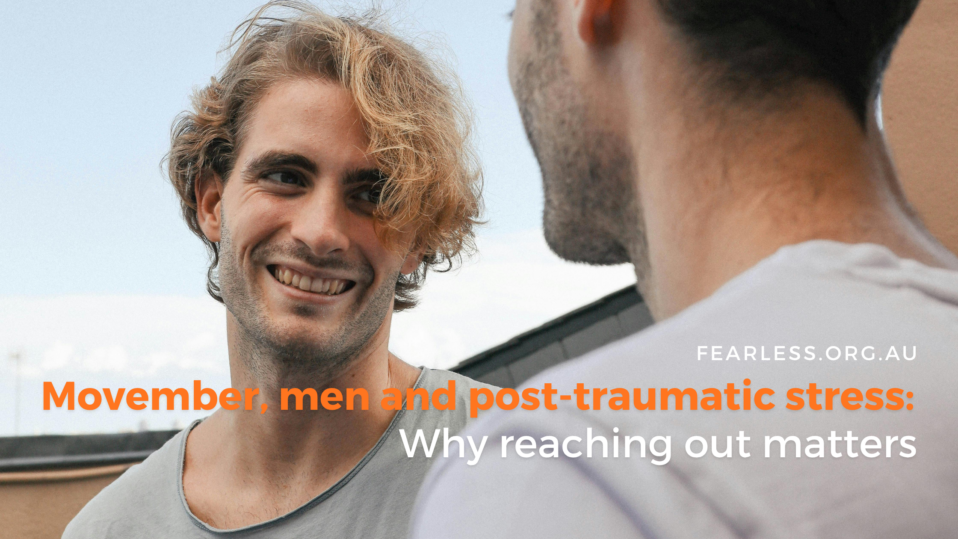
Each November, moustaches start appearing across Australia for Movember, the movement that turns a month of facial hair into a serious conversation about men’s health. Behind the fun sits a sobering reason. Many men stay quiet about how they’re really going, and reach a crisis point before they ask for help.

What is Movember, and why does it matter for mental health?
Movember began in Melbourne in 2003 and has grown into a global campaign focused on men’s health, including mental health and suicide prevention. For FearLess, the month is a chance to talk about something that affects many people in our community: how post-traumatic stress shows up in men, and why reaching out can feel so hard.
| Key fact | What we know |
|---|---|
| Trauma exposure | Between 57% and 75% of Australians will experience a potentially traumatic event in their lifetime |
| Men and suicide | Around three in four suicide deaths in Australia are men (AIHW) |
| Help-seeking | Men are less likely to seek professional help for their mental health |
Why do men find it harder to reach out?
A mix of culture, upbringing and expectation can make it harder for men to put their hand up. Many have grown up with the message that they should cope on their own, so admitting they’re struggling can feel like failure rather than an ordinary human moment. Recognising those barriers is the first step to getting past them.
| Common barrier | What can help |
|---|---|
| “I should be able to handle it myself” | Seeing help as a practical step, the way you’d see a physio for an injury |
| Worrying about looking weak | Hearing other men talk openly, especially people they respect |
| Not recognising the signs | Knowing what to look for, such as irritability, withdrawal, poor sleep or drinking more |
| Fear of judgement at work | Confidential services like MATES in Construction and Open Arms, built for their world |
Post-traumatic stress in male-dominated fields
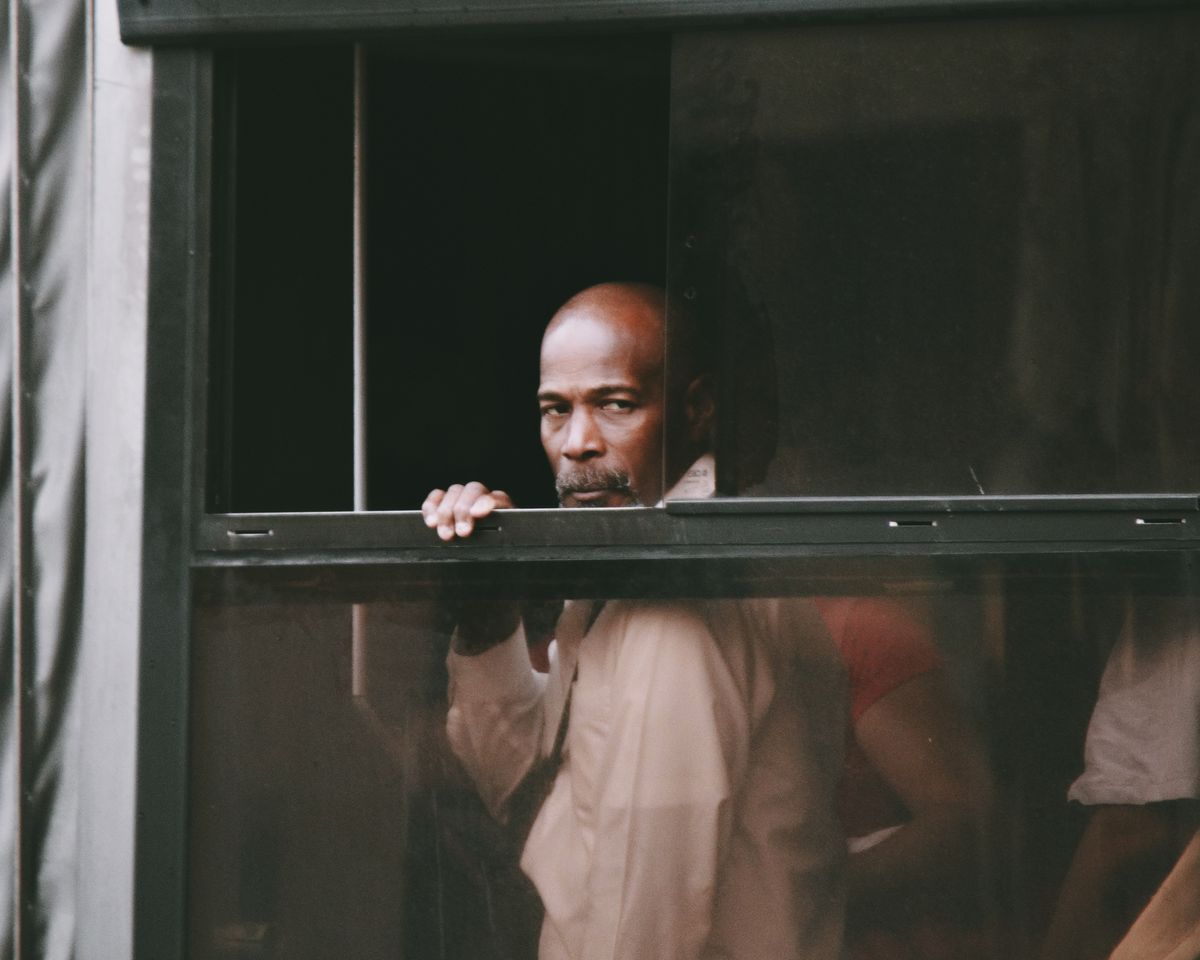
Some of the fields most exposed to trauma are also some of the most male-dominated. Veterans, first responders and tradespeople face higher exposure to traumatic events, often repeatedly, within workplace cultures that can discourage speaking up. While women are at higher risk of developing post-traumatic stress overall, men in these high-exposure roles carry a particular load, and are among the least likely to seek support.
| Field | Why the risk is higher | Specialist support |
|---|---|---|
| Veterans and ADF personnel | Combat and operational trauma, often over years of service | Open Arms, 1800 011 046 |
| First responders and emergency services | Repeated exposure to critical incidents | Lifeline, 13 11 14, and workplace support programs |
| Construction and trades | High-pressure culture and well-documented rates of distress | MATES in Construction, 1300 642 111 |
How to support the men in your life
You don’t need the perfect words. Noticing a change, asking a direct and caring question, and being ready to listen can open a door that has stayed shut for a long time. Offering something specific, like a walk on the weekend or a call midweek, often works better than a general “let me know if you need anything”. Our guides to starting the conversation and supporting someone with post-traumatic stress go into this further.
Where to find support
If you or a man in your life needs to talk, support is available.
- Lifeline: 13 11 14, 24-hour crisis support (Australia).
- Beyond Blue: 1300 22 4636, support for anxiety, depression and low mood (Australia).
- MATES in Construction: 1300 642 111, 24/7, for the construction and trades community (Australia). In New Zealand, call 0800 111 315.
- Open Arms: 1800 011 046, free 24/7 counselling for veterans and their families (Australia).
- Need to Talk?: free call or text 1737, any time (New Zealand).
If someone is in immediate danger, please call 000 in Australia or 111 in New Zealand.
FearLess and community
FearLess is a charity supporting people living with post-traumatic stress and their families across Australia and New Zealand. This Movember, we want every man carrying something heavy to know that reaching out is a sign of strength, and that help is within reach.
If you believe everyone affected by post-traumatic stress deserves better access to information, community and care, you can support our work or read more on the FearLess blog.
This article is for general awareness only. FearLess is not a medical organisation, and this content is not a substitute for professional advice. Please seek support from an appropriately qualified professional for your own circumstances. If you are in danger, call 000 in Australia or 111 in New Zealand.

Post a comment