
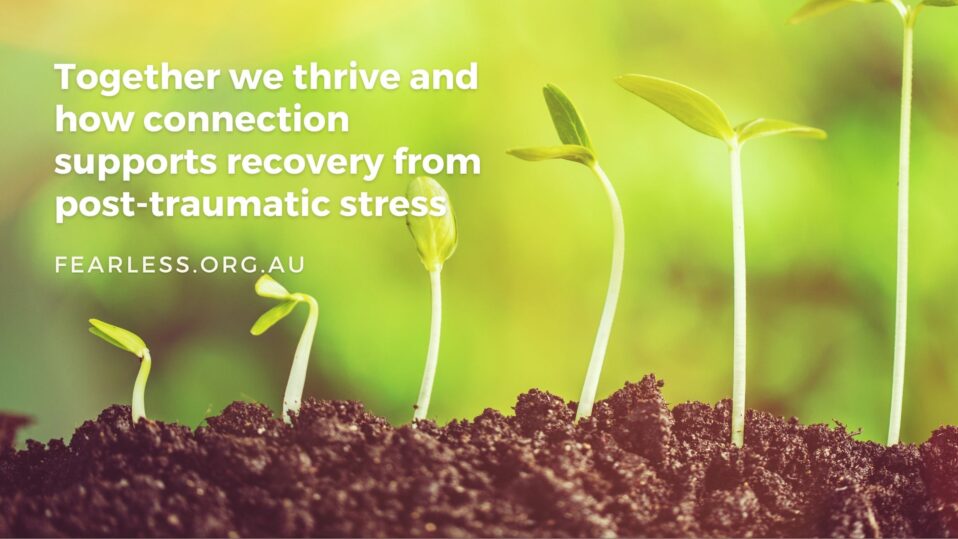
October is Mental Health Month in Australia, and this year’s theme from Mental Health Australia is Together We Thrive. Their message is that connection with other people is one of the best supports we have for our mental health and wellbeing.
For people living with post-traumatic stress, that can be hard to hear. Trauma often makes connection feel risky or tiring, and sometimes out of reach altogether. So this month we’re looking at why that happens, and at small, realistic ways to stay close to the people who matter.
Why trauma can pull people away from others
Post-traumatic stress changes how safe the world feels. After a traumatic experience, the body can stay on alert long after the danger has passed. A crowded room, a sudden noise or even a casual “how are you going?” can feel like too much. Pulling back is often the way people manage that. Our overview of what post-traumatic stress is explains more about how it shows up.
Some people withdraw because they feel no one could understand what they went through. Others worry about being a burden, or about getting angry or upset in front of people they love. Shame plays a part too. Many people living with post-traumatic stress blame themselves for how they are coping, even when they have done nothing wrong.
Tiredness adds another layer. After a week of broken sleep, a catch up with friends can feel like one more thing to get through. If that sounds familiar, our article on why PTSD disrupts sleep has some practical ideas.
Withdrawal like this is usually the nervous system trying to keep someone safe. The care for friends and family is often still there underneath.
How isolation can keep post-traumatic stress going
Time alone can be restful. But long stretches of isolation can make symptoms harder to live with. With fewer people around, there are fewer chances for fear and self-blame to be gently questioned. Avoidance can grow, so the list of places and people that feel manageable keeps getting shorter. We wrote about how loneliness and post-traumatic stress feed each other in managing loneliness.
Connection works in the other direction. Feeling safe with even one person can help the body settle, and it gives someone a place to put down some of what they are carrying. Phoenix Australia, the national centre of excellence in posttraumatic mental health, has information on recovery for people affected by trauma and the people close to them.
Small ways to stay connected
Connection doesn’t have to mean big gatherings or long heart to hearts. For someone living with post-traumatic stress, smaller and more predictable contact often works better.
A text message counts. So does sitting on the couch with someone and watching the footy without needing to talk. A walk with the same friend at the same time each week can feel easier than an open invitation to catch up sometime, because there are no surprises. Moving your body while you talk helps some people too, which we cover in why movement is one of the most powerful tools for mental health.
The setting makes a difference. A quiet café at 10am on a Tuesday feels very different from a busy pub on a Saturday night. It’s fine to pick the seat facing the door, to drive yourself so you can leave when you need to, or to say up front that you can stay for an hour.
Some people find it easier to connect with others who have been through something similar. Peer groups, ex-service organisations and online communities can offer a kind of understanding that’s hard to find anywhere else. Hearing someone describe exactly what you have felt can ease the sense of being alone with it. Our piece on the power of lived experience looks at why those stories matter.
Connection can also come from outside your usual circle. A community garden, a men’s shed, a local sporting club or a volunteering role gives people a reason to show up and something to do with their hands once they’re there.
If someone you love is pulling away
Watching someone withdraw is hard. The urge is often to push, or to take it personally. Steady, low pressure contact tends to help more. Keep inviting them even if they say no most of the time, and make it easy to say yes. Let them know the door is open without asking them to explain themselves.
Our guides on how to support someone with post-traumatic stress and how to check in on someone you’re worried about have more practical ideas. And remember to look after yourself as well. PTSD and relationships looks at how couples and families can keep talking when things are hard.
Taking the first step
If you’re living with post-traumatic stress and feel cut off from people, start small. Reply to one message, or say yes to one short visit. Each small step makes the next one a little easier.
If you’d like professional support, your GP is a good place to begin. Our overview of PTSD treatment options in Australia explains what’s available, and our getting help page lists more services.
Common questions
Why do people with post-traumatic stress pull away from others?
Trauma can leave the body on alert long after the danger has passed, so busy places, questions or social plans can feel overwhelming. People may also worry about being a burden, feel no one will understand, or carry shame about how they are coping. Pulling back is often a way of protecting themselves.
How can connection help with recovery from post-traumatic stress?
Feeling safe with even one person can help the body settle and gives someone a place to share what they are carrying. Regular contact can also gently challenge fear and self-blame, and stop avoidance from shrinking someone’s world.
How can I stay connected when socialising feels overwhelming?
Start small and keep it predictable. A text message, a weekly walk with one friend, or a short visit somewhere quiet can be easier than a big gathering. It is fine to choose where you sit, drive yourself so you can leave, or set a time limit.
Where to find support
If you need to talk to someone now, you can call Lifeline on 13 11 14 at any time of day or night, or Beyond Blue on 1300 22 4636. In New Zealand, you can call or text 1737 to talk with a trained counsellor. If someone is in immediate danger, call 000 (or 111 in New Zealand).
FearLess and community
FearLess is a charity supporting people living with post-traumatic stress and their families across Australia and New Zealand. We bring together people with lived experience, families and the organisations working alongside them, because nobody should have to manage post-traumatic stress on their own.
If you’d like to be part of that, you can support our work, become a FearLess partner or read more on the FearLess blog.
This article is for general awareness only. FearLess is not a medical organisation, and this content is not a substitute for professional advice. Please seek support from an appropriately qualified professional for your own circumstances. If you are in danger, call 000.

Post a comment